Mostrar mensagens com a etiqueta Livros. Mostrar todas as mensagens

15 de dezembro de 2009

Design, ergonomia e emoção

# Sugestão de leitura da semana:

Mont'Alvão, Claudia, Damazio, Vera. (2008). Design, ergonomia e emoção. Mauad X. Rio de Janeiro

Descrição do livro:

"Emoção, prazer, afeto, satisfação, eram termos, até há pouco tempo, praticamente ausentes do vocabulário da Ergonomia e do Design. Hoje, eles se fazem cada vez mais presentes, dando relevo à idéia de que as pessoas estabelecem relações afetivas com os produtos que as cercam e que é possível projetar com o objetivo de proporcionar experiências prazerosas e desencadear sentimentos positivos nos usuários. Mas quais são os limites dos campos da Ergonomia e do Design e Emoção? Quais suas áreas em comum, suas diferenças e contribuições para os usuários? Foi no calor dessa saudável e instigante discussão que percebemos a grande lacuna que existe sobre o tema em geral – e em língua portuguesa, em particular – e que a idéia desta coletânea foi concebida.

Objeto de reflexão há milênios, a Emoção vem despertando crescente interesse em campos distintos do conhecimento, e também entrou na agenda do Design e da Ergonomia. Com isso ficou evidente o fato de que, muito mais do que forma física e funções mecânicas, os produtos abrangem formas sociais e funções simbólicas e devem ser projetados com o intuito de proporcionar experiências prazerosas e desencadear sentimentos positivos em seus usuários.

O recente encontro do Design e da Ergonomia com a Emoção e seu caráter interdisciplinar é o tema deste livro. Nele, o leitor encontrará trabalhos recentemente apresentados por pesquisadores brasileiros em importantes eventos internacionais e perspectivas variadas sobre este novo e promissor campo reconhecido como “Design Emocional”. Esta coletânea traz aos pesquisadores de Ergonomia e do Design idéias brasileiras sobre o tema que já transitam em âmbito internacional, e aos leitores – usuários de produtos de toda a ordem –, aspectos invisíveis e intangíveis do mundo construído. Também vem promover entre os professores uma discussão fundamental para a formação de futuros profissionais mais conscientes sobre os efeitos de seus projetos nos usuários e mais eficientes na construção de uma sociedade mais responsável e solidária."
.

7 de dezembro de 2009

Rapidinhas...


# Prémio João Branco 2009

O Prémio João Branco 2009, promovido pela UA e pela família do João Branco foi atribuído à equipa de investigação da UNIDCOM/IADE coordenada pelo prof. Doutor Eduardo Côrte-Real e constituída pelos profs. Martim Lapa, Vítor Simões, João Palla e pelos bolseiros Lara Reis e Shakil Rahim, com o projecto "Análise do papel multidisciplinar do Desenho na Cultura Visual portuguesa do Século XX dos anos 50 aos anos 70". O Júri decidiu ainda atribuir duas menções especiais aos projectos «Lugares Criativos para uma Cidade Colaborativa», de Teresa Franqueira, e «Speechant – Chanting & Speeching: Sistema de notação tipográfica para a educação de adultos», de Jorge dos Reis.
O prémio será entregue no decorrer da cerimónia do 36º aniversário da Universidade de Aveiro, agendada para 15 de Dezembro 2009, com início às 10h00, no auditório da Reitoria.


# Roberto Barbosa - um olhar de fogo

No próximo dia 11 de Dezembro de 2009, pelas 18h30, será lançado o livro "Roberto Barbosa - um olhar de Fogo" com biografia de Jorge Pinheiro e selecção de fotografias de Carlos Costa. O evento terá lugar no IADE Chiado Center.


# Ilustração em Portugal I - 1910-1940 de Theresa Lobo

No próximo dia 17 de Dezembro de 2009 será lançado o primeiro volume do livro "Ilustração em Portugal I - 1910-1940" da autoria de Theresa Lobo. O evento acontecerá no IADE Chiado Center em horário ainda a divulgar.


# Biblioteca multimédia online da Europa

A biblioteca multimédia online da Europa, "Europeana", já está acessível ao público, que através da Internet poderá aceder a mais de dois milhões de obras dos 27 Estados-membros da União Europeia. Esta biblioteca virtual conta com livros, mapas, gravações, fotografias, documentos de arquivo, pinturas e filmes do acervo das bibliotecas nacionais e instituições culturais dos 27 Estados-Membros da UE, tendo por exemplo de Portugal a Carta plana de parte da Costa do Brasil, um mapa de 1784.
Acessível, em todas as línguas da UE, através do endereço (www.europeana.eu), a biblioteca multimédia europeia conta com material fornecido por mais de 1000 organizações culturais de toda a Europa, incluindo Museus, como o Louvre de Paris, que forneceram digitalizações de quadros e objectos das suas colecções.
.

24 de novembro de 2009

Uma homenagem ao designer António Sena da Silva


Foi lançado, no passado dia 18 de Novembro de 2009, pela Fundação Calouste Gulbenkian, um livro dedicado à vida e obra de António Sena da Silva (1926-2001), notável designer que foi também professor, arquitecto, divulgador, gestor e o primeiro presidente do Centro Português do Design.

Esta edição – que inclui textos de especialistas de várias áreas disciplinares, alguns dos quais companheiros de percurso – revela a actualidade do seu pensamento e o seu decisivo contributo para a afirmação e consolidação do Design em Portugal. Cada um dos 17 autores que colaboram nesta edição abordou uma determinada faceta da sua vida e obra.A edição integra ainda uma biografia, um levantamento de trabalhos e projectos e uma colectânea dos seus textos, muitos deles inéditos.

Trata-se da terceira obra publicada pela Fundação dedicada a grandes designers nacionais, depois das edições sobre Sebastião Rodrigues (1995) e Daciano da Costa (2001). Publicada em colaboração com o Centro Português de Design, esta edição é coordenada por Bárbara Coutinho, directora do Mude (Museu do Design).

Ler mais no site da Gulbenkian.
.

10 de novembro de 2009

Introdução à cultura visual

# Sugestão de leitura da semana:

Mirzoeff, Nicholas. (2009). An introduction to visual culture. Routledge. London.
ISBN 0415158761

Descrição:

"The emerging field of visual culture poses rough terrain for beginners with its nuanced distinctions and reliance on postmodern theory. Not until An Introduction to Visual Culture has any book attempted to present a comprehensive and accessible approach to this exciting new subject.

Nicholas Mirzoeff begins by defining what visual culture is, and explores how and why visual media--fine art, cinema, the Internet, advertising, performance, photography, television--have become so central to contemporary everyday life. He argues that the visual is replacing the linguistic as our primary means of communicating with each other and of understanding our postmodern world, demonstrating this through powerful examples, from Diana's funeral to the Latina singer Selena, and from the X-Files to Independence Day.


Mirzoeff then examines the importance of race and ethnicity, gender and sexuality, and the body in visual culture. These various forms of social discourse provide essential tools for reading images and thus define the study of visual culture as an inherently political project. Mirzoeff tackles the difficult subject of the gaze and the "other" and offers the reader a clear synthesis of these concepts.


Lively and provocative, An Introduction to Visual Culture offers an accessible entry to this new way of understanding images. "

.

3 de novembro de 2009

O que sabem os designers

# Sugestão de leitura da semana:

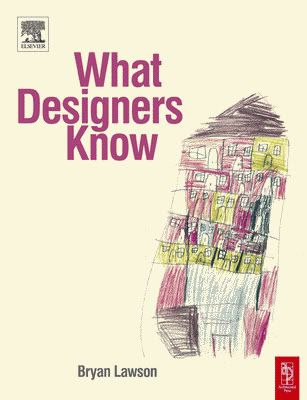
Lawson, Bryan (2004). What Designers Know. Burlington: Architectural Press.
ISBN: 0750664487

"Each chapter deals with a different technique from which we can best represent and make explicit the forms of knowledge used by designers. The book explores whether design knowledge is special, and attempts to get to the root of where design knowledge comes from. Crucially, it focuses on how designers use drawings in communicating their ideas and how they 'converse' with them as their designs develop. It also shows how experienced designers use knowledge differently to novices suggesting that design 'expertise' can be developed. Overall, this book builds a layout of the kinds of skill, knowledge and understanding that make up what we call designing.

1. Provides an exploration of research techniques giving an insight into the source of design knowledge

2. Illustrates how designers interact with their drawings and with computers in developing their knowledge
3. Provides the latest debates on the nature of design knowledge "


Outra obra, deste autor, já sugerida neste blogue: "How designers Think: The Design Process Demystified."
.

27 de outubro de 2009

Visual Thinking: for Design

# Sugestão de leitura da semana:

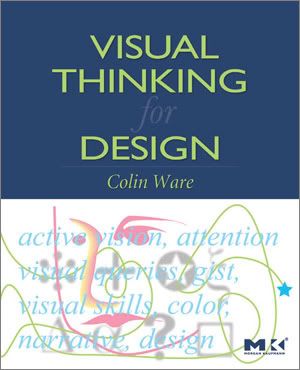
Ware, Colin (2008). Visual Thinking: for Design. Morgan Kaufmann. ISBN-10: 0123708966

Ler comentários sobre este livro, no blog de Stephen Few, Visual Business Intelligence.

Description
"Increasingly, designers need to present information in ways that aid their audience's thinking process. Fortunately, results from the relatively new science of human visual perception provide valuable guidance. In Visual Thinking for Design, Colin Ware takes what we now know about perception, cognition, and attention and transforms it into concrete advice that designers can directly apply. He demonstrates how designs can be considered as tools for cognition - extensions of the viewer's brain in much the same way that a hammer is an extension of the user's hand. Experienced professional designers and students alike will learn how to maximize the power of the information tools they design for the people who use them."

Audience

"Designers of all kinds, including professionals and students in information design, industrial design, interaction design, web design, and users of information visualization, who need practical guidance in visual and cognitive science in order to excel at their jobs' or future jobs".

Editorial Reviews
"Through a detailed analysis of the mechanics of visual cognition, this book teaches us how to see as designers, by anticipating how others will see our designs. Ware summarizes the thread of inquiry that leads through Goethe, Klee, Arnheim, Gibson and Tufte, sifting it for relevance to the artful science of visualization, and condensing it into one eminently readable volume".
- Fritz Drury, Professor of Illustration, Rhode Island School of Design


"All the clanking gears are here: variable resolution image detection, eye movements, environmental information statistics, bottom-up/top-down control structures, working memory, the nexus of meaning, and specialized brain areas and pathways. By the time hes done, Ware has reconstructed cognitive psychology, perception, information visualization, and design into an integrated modern form. This book is scary good."
- Stuart Card, Senior Research Fellow, and manager of the User Interface Research group at the Palo Alto Research Center


"In this fascinating new book, seasoned professionals, educators and students alike will find that Colin Ware has written an incredibly accessible text that translates years of scientific research into concrete design applications. In a clear and effective manner, Ware provides a comprehensive introduction to the interrelationships among the physiological and cognitive components through which humans process and understand the visual world. This scientific perspective for graphic design provides an additional dimension for discussing the reasoning behind design choices while remaining adaptable to the shifting contexts in which these choices occur."
-Paul Catanese. Assistant Professor of New Media, San Francisco State University

.

20 de outubro de 2009

Manual de Psicologia Ambiental

# Sugestão de leitura da semana:

Bechtel, R.B. & Churchman, A.(Eds)(2002). Handbook of Environmental Psychology. Wiley.

Descrição do livro:

"An international team of leading scholars explores the latest theories, research, and applications critical to environmental psychology

Featuring the latest research and concepts in the field straight from the world's leading scholars and practitioners, Handbook of Environmental Psychology provides a balanced and comprehensive overview of this rapidly growing field. Bringing together contributions from an international team of top researchers representing a myriad of disciplines, this groundbreaking resource provides you with a pluralistic approach to the field as an interdisciplinary effort with links to other disciplines.

Addressing a variety of issues and practice settings, Handbook of Environmental Psychology is divided into five organized and accessible parts to provide a thorough overview of the theories, research, and applications at the forefront of environmental psychology today. Part I deals with sharpening theories; Part II links the subject to other disciplines; Part III focuses on methods; Part IV highlights applications; and Part V examines the future of the field.

Defining the ongoing revolution in thinking about how the environment and psychology interact, Handbook of Environmental Psychology is must reading for anyone coping directly with the attitudes, beliefs, and behaviors that are destroying our environment and putting our lives in jeopardy.

Topics include:
* Healthy design
* Restorative environments
* Links to urban planning
* Contaminated environments
* Women's issues
* Environments for aging
* Climate, weather, and crime
* The history and future of disaster research
* Children's environments
* Personal space in a digital age
* Community planning"
.

13 de outubro de 2009

Visual Ergonomics in the Workplace

# Sugestão de leitura da semana: Anshel, Jeffrey (1998). Visual Ergonomics in the Workplace, Taylor & Francis. ISBN 0-7484-0658-1

Neste livro podemos encontrar informação sobre o aparelho visual humano, sua anatomia e fisiologia, bem como a sua difícil adaptação à leitura em ecrãs de computadores e sob a influência da iluminação artificial. Apesar de estar já um pouco desactualizado, sobretudo no que diz respeito à tecnologia usada nos ecrãs actuais, o livro aborda alguns conteúdos fundamentais que importa dominar...

"Organization of this book
This book is designed to give you a working knowledge of the eye and visual system so that you can make informative workplace decisions.

Chapter 1 starts with an historical perspective on how our vision and visual system has had to evolve to keep up with our social development. Chapter 2 describes the working of the eyes and visual system, simplified for basic understanding for the non-medical reader. In Chapter 3, the interaction of the eye in the workplace is discussed, with emphasis on the functional vision of the worker. In Chapter 4, the technology of the VDT monitor and how the images are perceived by the eye are discussed. Computer Vision Syndrome is a compilation of symptoms which arise from extended viewing of the VDT when the demands of the task exceed the abilities of the viewer. We discuss the various symptoms in Chapter 5 and address the possible reasons why they arise. How the eyes and visual system is tested and the role the environment plays in the examination procedure is
discussed in Chapter 6. Although the main thrust of this book is the area of office ergonomics related to VDT viewing, we will also review the area of industrial vision and its many ramifications for eye safety and comfort in Chapter 7. We often take our eyes for granted, often not having examinations for years at a time if we feel nothing is ‘wrong’. There are many things that can go wrong and not everyone is fortunate enough to have ‘perfect eyes’. The computer is also a useful tool for those who are visually impaired and there are many options available for them, which are discussed in Chapter 8. The remedies for various problems are covered in Chapter 9. These include visual,environmental and physical areas which can be altered to increase VDT viewing comfort. There are many factors related to general eye care which can assist the reader in maintaining good visual habits. Chapter 10 discusses these factors and how to address them for the worker. Every workplace has a certain budget within which to work. The changes which are suggested would be irrelevant if the cost considerations were not added to the equation. Therefore, the concern of the economics of ergonomics is addressed in Chapter 11. And then there are the governmental standards which also affect every workplace. We will attempt to deliver, in Chapter 12, the latest information which has passed as legislation or as standards in various countries. This area is obviously in a constant state of flux and should be viewed only as a general guideline. It is hoped that this book serves as a cornerstone for a good understanding of the role vision plays in the lives of employees in the workplace. We spend almost one third of our lives in this environment and our eyes are our most important sense. The efficiency with which we see relates directly to how effectively and safely we perform on the job."
.

6 de outubro de 2009

The Art and Science of Interface and Interaction Design

# Sugestão de leitura da semana

Sommerer, C., Jain, L. C. & Mignonneau, L. (Eds.), The Art and Science of Interface and Interaction Design (Vol. 1). Series: Studies in Computational Intelligence , Vol. 141. Springer. ISBN: 978-3-540-79869-9

Sobre o livro:

"Artists and creators in interactive art and interaction design have long been conducting research on human-machine interaction. Through artistic, conceptual, social and critical projects, they have shown how interactive digital processes are essential elements for their artistic creations. Resulting prototypes have often reached beyond the art arena into areas such as mobile computing, intelligent ambiences, intelligent architecture, fashionable technologies, ubiquitous computing and pervasive gaming. Many of the early artist-developed interactive technologies have influenced new design practices, products and services of today's media society. This book brings together key theoreticians and practitioners of this fields. It shows how historically relevant the issues of interaction and interface design are, as they can be analyzed not only from an engineering point of view but from a social, artistic and conceptual, and even commercial angle as well."
.

22 de setembro de 2009

A Guide to Methodology in Ergonomics

# Sugestão de leitura da semana:

Salvendy, G., Stanton, N. & Young, M. (2003). A Guide to Methodology in Ergonomics: Designing for Human Use. 2nd edition, Taylor & Francis. ISBN: 0-7484-0703-0

Tal como o título indica, este livro apresenta-nos uma compilação de diversos métodos e técnicas habitualmente usados em Ergonomia. Os autores avaliaram a validade e fiabilidade, bem como os custos e benefícios, associados ao uso desses mesmos processos, o que nos ajuda a equacionar a sua usabilidade e aplicabilidade para os nossos estudos.

Ler mais sobre este livro no GoogleBooks.
.

7 de julho de 2009

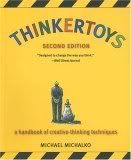
Thinkertoys: A Handbook of Creative-Thinking Techniques

# Sugestão de leitura da semana:

Michalko, Michael (2006), Thinkertoys: A Handbook of Creative-Thinking Techniques. 2ª Edição. Ten Speed Press.

"THINKERTOYS will teach you how to generate new ideas for businesses, markets, sales techniques, and products and product extensions. Packed with fun and practical tools and exercises, it outlines 30 practical linear and intuitive techniques that can be used by individuals or groups to tackle and solve business problems in fresh, creative ways.

An updated edition of the best-selling business creativity book, with more than 30 brainstorming techniques and hundreds of creative-thinking tips and tricks. Revision includes new techniques, examples, and sections on group brainstorming and endgames."
.

30 de junho de 2009

Never use white type on a black background


# Sugestão de leitura da semana:

Gaalen, Anneloes van (2009), Never Use White Type on a Black Background. And 50 other Ridiculous Design Rules. BIS Publishers. ISBN: 978-90-6369-207-0

"Never use white type on a black background", uma regra da autoria de David Ogilvy (1911-1999), conhecido como o pai da publicidade, é o título deste livro curioso que nos oferece 51 regras ridículas do design.

"Less is more", "Form follows function", "Keep it simple", "Dress your age" são apenas algumas, a lista é enorme. Para alguns são regras sábias, fontes de inspiração que vale a pena ter sempre à mão. Para outros, são apenas frases feitas, dogmas sem grande valor e que podem, inclusivamente, limitar a criatividade.

As 51 regras aqui apresentadas, mais ou menos obscuras, são acompanhadas das respectivas citações dos designers, e a presentadas por ordem cronológica, juntamente com uma imagem que as suporta e outra que as nega. Assim, só temos que tomar uma posição... a favor ou contra a regra. De qualquer forma, independentemente do lado que se tome, este pode ser um processo interessante de pensar o design.

Pelo que consegui apurar, algumas das ilustrações (fabulosas) são da autoria de artistas portugueses: Sara Franco e Ricardo Cabral.

Espera-se, para breve, a publicação de mais regras sobre design de moda, publicidade e tipografia.
.

26 de junho de 2009

The Designer's Review of Books


O site "The Designer's Review of Books", fundado e editado por Andy Polaine, ambiciona ser um local de excelência para se encontrar informação detalhada sobre livros relacionados com design. A ideia é disponibilizar informação, suficiente para ajudar na tomada da decisão de comprar, ou não, os livros (que são sempre muito caros), incluindo textos, imagens e avaliações de conteúdo.
.

23 de junho de 2009

História do Design em Portugal I

# Sugestão de leitura da semana:

Souto, Maria Helena (2009). História do Design em Portugal I, Reflexões. Lisboa: IADE Edições.

Integrado nas comemorações dos 40 anos do IADE procedeu-se na passada terça-feira, 16 de Junho no IADE Chiado Center, ao lançamento do livro "História do Design em Portugal I, Reflexões da professora doutora Maria Helena Souto, com prefácio do historiador de arte José-Augusto França.

O livro, com apenas 90 páginas, está organizado em torno de três grandes temas:

> Os desafios da industrialização no Portugal Oitocentista. Arte e Técnica: Uma nova cultura projectual; O debate entre engenheiros e arquitectos; Desenvolvimento de estruturas metálicas e o Ensino das artes aplicado à indústria.

> Pioneiros do Design: Rafael Bordalo Pinheiro e a cerâmica industrial; Leal da Câmara - desenho de mobiliário.

> Design em Portugal no Séc. XX, Reflexões: As primeiras experiências de ensino do design; O curso de formação artística da SNBA e a fundação do IADE.

Preço de capa: 17,50 Euros.
Pode ser adquirido na Biblioteca António Quadros
.

16 de junho de 2009

Design is the problem

# Sugestão de leitura da semana:


Design is the Problem Cover

Design is the Problem: The Future of Design Must be Sustainable


In Design is the Problem, Nathan Shedroff examines how the endemic culture of design often creates unsustainable solutions, and shows how designers can bake sustainability into their design processes in order to produce more sustainable solutions. Rosenfeld Media, 2009. Read More >


9 de junho de 2009

Neuroergonomics

# Sugestão de leitura da semana:

Parasuraman, R. & Rizzo, M., (2007). Neuroergonomics: the brain at work. Oxford University Press US. ISBN 0195177614, 9780195177619


"Neuroergonomics can be defined as the study of brain and behavior at work. It combines two disciplines--neuroscience, the study of brain function, and human factors, the study of how to match technology with the capabilities and limitations of people so they can work effectively and safely.

The goal of merging these two fields is to use the startling discoveries of human brain and physiological functioning both to inform the design of technologies in the workplace and home, and to provide new training methods that enhance performance, expand capabilities, and opitimize the fit between people and technology.

Research in the area of neuroergonomics has blossomed in recent years with the emergence of noninvasive techniques for monitoring human brain function that cna be used to study various aspects of human behavior in relation to technology and work, including mental workload, visual attention, working memory, motor control, human-automation interaction, and adaptive automation.

This volume will provide the first systematic overview of this emerging area, describing the theoretical background, basic research, major methods, as well as the new and future areas of application. This collection will benefit a number of readers: the experienced researcher investigating related questions in human factors and cognitive neuroscience, the student wishing to get a rapid but systematic overview of the field, and the designer interested in novel approaches and new ideas for application. Researchers in human factors and ergonomics, neuroscience, cognitive psychology, medicine, industrial engineering, and computer science will find this volume most helpful."

Links:
Ler mais, sobre este livro, no GoogleBooks e no Designing*for humans.
.

2 de junho de 2009

Wayfinding behavior: cognitive mapping and other spatial processes

A sugestão de leitura desta semana aborda as questões do "wayfinding":

Golledge, Reginald G. (1999), Wayfinding behavior: cognitive mapping and other spatial processes, JHU Press.
ISBN 080185993X, 9780801859939

"The metaphor of a "cognitive map"has attracted wide interest since it was first proposed in the late 1940s. Researchers from fields as diverse as psychology, geography, and urban planning have explored how humans process and use spatial information, often with the view of explaining why people make wayfinding errors or what makes one person a better navigator than another. Cognitive psychologists have broken navigation down into its component steps and shown it to be an interplay of neurocognitive functions, such as "spatial updating"and "reference frames"or "perception-action couplings."But there has also been an intense debate among biologists over whether animals have cognitive maps or have other forms of internal spatial representations that allow them to behave as if they did. Yet until now, little has been done to relate research on human and non-human subjects in this area.

In Wayfinding Behavior: Cognitive Mapping and Other Spatial Processes Reginald Golledge brings together a distinguished group of scholars to offer a unique and comprehensive survey of current research in these diverse fields. Among the common themes they discover is the psychologists' "black box"approach, in which the internal mechanisms of spatial perception and route planning are modeled or constructed, like metaphors, based on the behavioral evidence. Cognitive neuroscientists, on the other hand, have attempted to discover the neurocognitive basis for spatial behavior. (They have shown, for example, that damage in the hippocampus system invariably impairs the ability of animals and humans to learn about, remember, and navigate through environments, and studies in humans show that neurons in this system code for location, direction, and distance, thereby providing the elements needed for a mapping system.) Artificial intelligence and robotics theorists attempt to construct intelligent mapping systems using computer technology. In these areas, there is growing evidence that, as in human wayfinding processes, useful representations cannot be achieved without sacrificing completeness and precision.

Wayfinding Behavior: Cognitive Mapping and Other Spatial Processes offers not only state-of-the-art knowledge about "wayfinding, "but also represents a point of departure for future interdisciplinary studies. "The more we know," concludes volume editor Reginald Golledge, "about how humans or other species can navigate, wayfind, sense, record and use spatial information, the more effective will be the building of future guidance systems, and the more natural it will be for human beings to understand and control those systems."

Ler mais no Google books.
.

26 de maio de 2009

In the Bubble: Designing in a Complex World

# Sugestão de leitura da semana:

Thackara, John (2005), In the Bubble: Designing in a Complex World. The MIT Press.
ISBN-10: 0262201577

"We're filling up the world with technology and devices, but we've lost sight of an important question: What is this stuff for? What value does it add to our lives? So asks author John Thackara in his new book, In the Bubble: Designing for a Complex World. These are tough questions for the pushers of technology to answer. Our economic system is centered on technology, so it would be no small matter if "tech" ceased to be an end-in-itself in our daily lives. Technology is not going to go away, but the time to discuss the end it will serve is before we deploy it, not after. We need to ask what purpose will be served by the broadband communications, smart materials, wearable computing, and connected appliances that we're unleashing upon the world. We need to ask what impact all this stuff will have on our daily lives. Who will look after it, and how? In the Bubble is about a world based less on stuff and more on people. Thackara describes a transformation that is taking place now—not in a remote science fiction future; it's not about, as he puts it, "the schlock of the new" but about radical innovation already emerging in daily life. We are regaining respect for what people can do that technology can't. In the Bubble describes services designed to help people carry out daily activities in new ways. Many of these services involve technology—ranging from body implants to wide-bodied jets. But objects and systems play a supporting role in a people-centered world. The design focus is on services, not things. And new principles—above all, lightness—inform the way these services are designed and used. At the heart of In the Bubble is a belief, informed by a wealth of real-world examples, that ethics and responsibility can inform design decisions without impeding social and technical innovation."

Ler mais no site In the Bubble, de John Thackara
.
.

12 de maio de 2009

Designing for the Digital Age

# A nossa sugestão de leitura da semana vai para:

Goodwin, Kim (2009). Designing for the Digital Age: How to Create Human-Centered Products and Services. Wiley
ISBN-10: 0470229101

"Whether you’re designing consumer electronics, medical devices, enterprise Web apps, or new ways to check out at the supermarket, today’s digitally-enabled products and services provide both great opportunities to deliver compelling user experiences and great risks of driving your customers crazy with complicated, confusing technology.

Designing successful products and services in the digital age requires a multi-disciplinary team with expertise in interaction design, visual design, industrial design, and other disciplines. It also takes the ability to come up with the big ideas that make a desirable product or service, as well as the skill and perseverance to execute on the thousand small ideas that get your design into the hands of users. It requires expertise in project management, user research, and consensus-building. This comprehensive, full-color volume addresses all of these and more with detailed how-to information, real-life examples, and exercises. Topics include assembling a design team, planning and conducting user research, analyzing your data and turning it into personas, using scenarios to drive requirements definition and design, collaborating in design meetings, evaluating and iterating your design, and documenting finished design in a way that works for engineers and stakeholders alike. "

Poderão descarregar o capítulo 16, inteiramente gratuito, aqui (PDF, 1.4MB).
Boas leituras...
.

5 de maio de 2009

Interfaces.com: Cognitive Tools for Product Designers

# Sugestão de leitura da semana:
Werby, Olga (2008), Interfaces.com: Cognitive Tools for Product Designers. CreateSpace; Kindle Edition edition

"Every profession develops a set of cognitive tools and a culture that envelops its activities, artifacts, knowledge, and practice. "Interfaces.com: Cognitive Tools for Product Designers" offers readers an introduction to the product design conceptual framework: what goes into creation of a successful product design? Individual differences in personality types and learning styles, memory limitations, perception, background and social knowledge, cultural differences, reasoning styles, categorization strategies, and attention controls are examined as usability variables for developing products that work for specific audiences. Visual learners would do better with a paperback edition of this book."
.